On the morning of September 11, 2001, nineteen terrorists associated with the extremist group al-Qaeda hijacked four commercial airplanes to carry out coordinated suicide attacks against the United States. Two of the planes, American Airlines Flight 11 and United Airlines Flight 175, were intentionally flown into the North and South Towers of the World Trade Center in New York City. A third plane, American Airlines Flight 77, struck the Pentagon in Arlington, Virginia, while a fourth, United Airlines Flight 93, crashed in a field near Shanksville, Pennsylvania, after passengers and crew heroically fought back against the hijackers.
The devastation was catastrophic, resulting in the deaths of 2,977 victims from over 90 nations. In New York, the intense heat from burning jet fuel weakened the structural steel of the Twin Towers, causing both 110-story buildings to collapse within less than two hours of being struck. Among those killed were 441 first responders, including firefighters and police officers who had rushed into the buildings to save others, marking the greatest single-day loss of emergency personnel in American history.
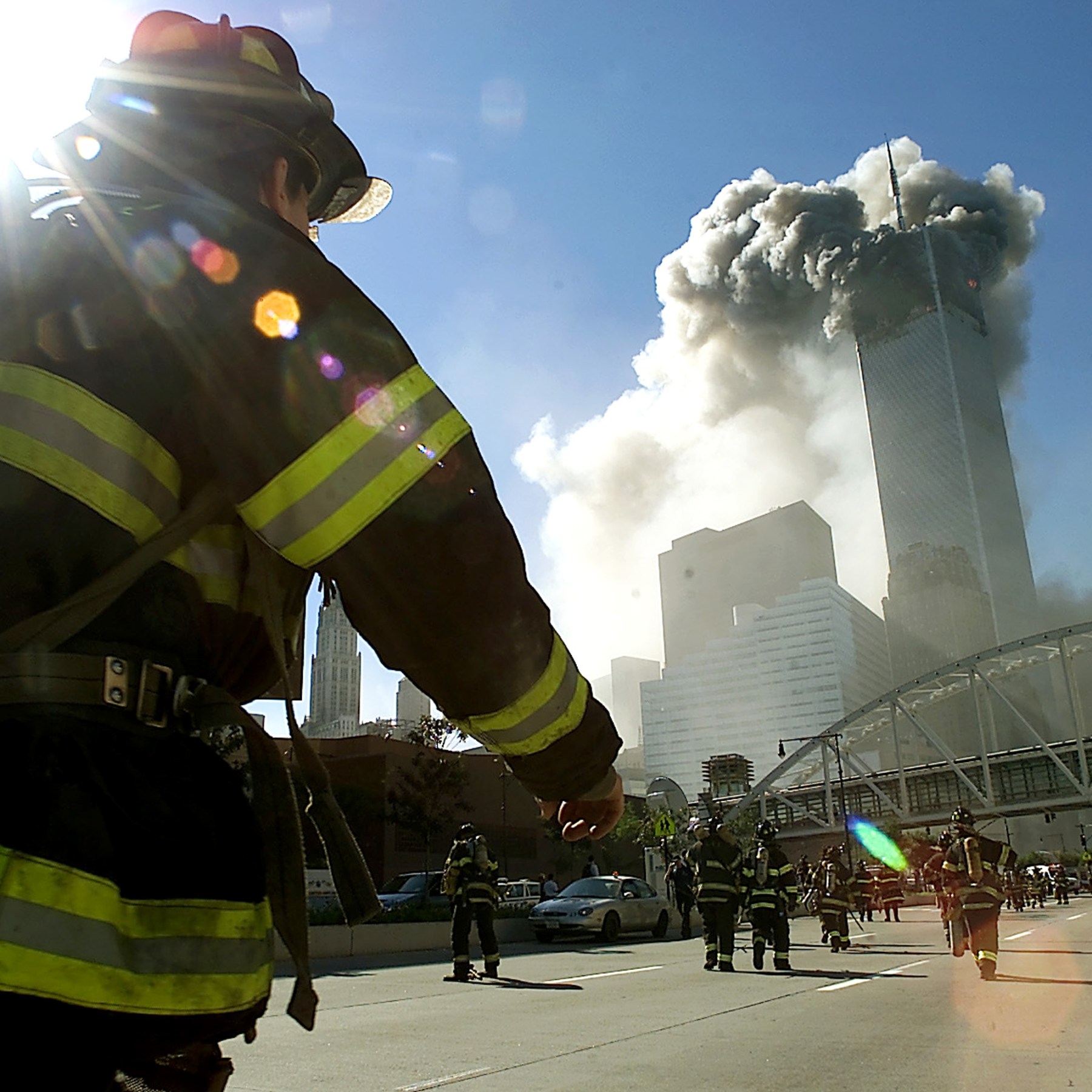
The 9/11 attacks fundamentally reshaped global security and U.S. foreign policy. In the immediate aftermath, President George W. Bush declared a "War on Terror," leading to the invasion of Afghanistan to dismantle al-Qaeda and remove the Taliban regime that harbored them. Domestically, the U.S. government overhauled its security infrastructure by creating the Department of Homeland Security and passing the USA PATRIOT Act to expand surveillance and intelligence capabilities. Decades later, the legacy of the day continues through the National September 11 Memorial & Museum and the ongoing health challenges faced by thousands of survivors and responders exposed to toxic debris.
The lasting impacts of the September 11 attacks remain deeply embedded in global infrastructure and public health as of 2026. Structurally, the attacks led to a permanent transformation of national security through the creation of the Department of Homeland Security and the Transportation Security Administration (TSA), which federalized airport security and introduced rigorous screening protocols that persist today. Legally, the USA PATRIOT Act significantly expanded government surveillance and intelligence-gathering powers, sparking a multi-decade debate over the balance between national safety and civil liberties. These changes also reshaped foreign policy, moving the United States toward a "militarized" stance that involved lengthy conflicts in Iraq and Afghanistan and continues to influence geopolitical relations and military strategy in 2026.
